
Pages explained
This page explains how to correctly use the two-page European Accident Statement. Each page has a specific purpose and must be completed carefully to ensure both drivers and insurance companies receive accurate and matching information.
The European Accident Statement is designed to record the facts of a road accident in a clear and standardized way. When completed correctly, both parties leave the scene with an identical record of the incident, which helps prevent misunderstandings and supports a smoother insurance claims process.
First Accident Statement page
On the first page, enter your details in one column. If another party is involved, they must provide their information in the adjacent column. This includes vehicle details, insurance information, and a description of how the accident occurred.
If no other party is involved (for example, in a single-vehicle accident), only this page needs to be completed once. In this case, fill in your own details and leave the second column empty.
If you disagree with the other driver’s account, clearly note this in the “My Remarks” section. Once all details are completed, both drivers must sign the page. After signing, send this page to your insurance company.
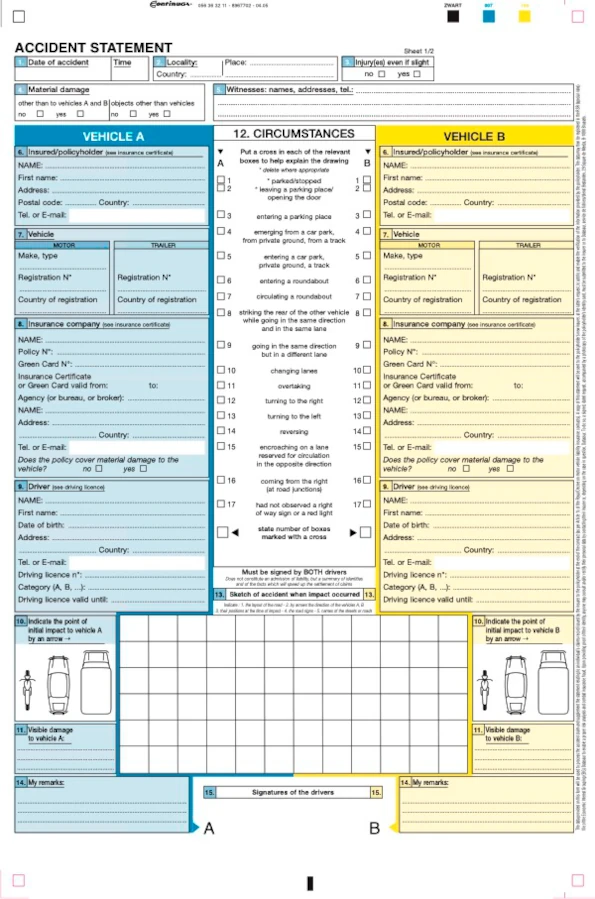
Second Accident Statement page
The second page is a duplicate of the first and must contain the same information as the first page. Both drivers must again sign this page to confirm the details are identical.
The other party keeps this page and sends it to their insurance company. If available, you may use a version of the second page in a different language, as long as the content remains the same. This ensures both insurers receive consistent and legally valid information.